Carnivorous Plants

Venus Fly Trap

Venus Fly Trap

We tend to think of plants getting their nutrients from the soil, using their roots to gather all of the necessary elements from the ground. Not all plants do this, though. Some eat flesh!

Carnivorous plants are plants that use nutrients derived from insects or animals in place of, or in addition to, typical soil-based nutrients. They are mostly found growing in areas where the soil nutrients are very low, and so nutrients must be taken from a source other than the soil.

» Read more…

The Power of Sound – Sonic Warfare

The power of sound

The power of sound

Sound is an amazing force, and one that is often overlooked in terms of its powerful influence and destructive potential. The lucky ones among us get to hear sound every day, and what a privilege it is. There are times, however, when hearing may be a detriment to us. This is increasingly becoming the case with the development and application of sonic weapons by various military forces. Sound as a weapon is not a particularly new idea, but for years there has been much secrecy and misinformation shrouding the subject. » Read more…

Thomas Midgley Jr – The Worlds Most Destructive Man

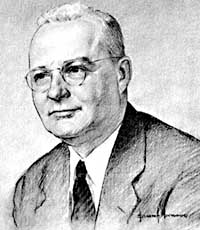
Thomas Midgley Jr.

Thomas Midgley Jr.

“Midgley’s name is inseparably associated with four outstanding advances. The first was the discovery of the chemical antiknock agents. Tetra-ethyl lead, the principal one of these, has added immensely to the performance and efficiency of gasoline engines both in the air and on the ground. The second advance, which was necessary to the practical success of the first, was the extraction of bromine from sea water. The third was the utilization of fluorine to produce an altogether new series of refrigerating compounds, the only such compounds known which are stable, non-flammable, and completely non-toxic, and which are therefore indispensable in air-conditioning.  The fourth advance was in the field of rubber, in which he extended the knowledge of the chemistry of vulcanization and of the fundamental composition of natural and synthetic rubbers.” – Biographical Memoir of Thomas Midgley Jr. 1889 – 1944 By Charles F. Kettering

He certainly sounds like quite the scientist, doesn’t he? No-one can deny that he was indeed gifted in the field of chemistry, despite the fact that he had never received and formal training as a scientist. His training was in Engineering, though after gaining an interest in the industrial applications of chemistry he ceased to continue his engineering work. Although his work was pioneering in some respects, it left a deadly trail behind him. » Read more…

The Dark Side of the Moon

Earth's Moon as seen from the North Pole

Earth's Moon as seen from the North Pole

The Moon. What a wonderful thing it is. We, as humans, have developed somewhat of a bond to our Moon, and this is understandable. After all, it has a profound effect on life on Earth, most of this is positive, although there are suspicions that there are some effects of the Moon which have lead to less-than favourable outcomes, as we will explore. » Read more…

Multiple Chemical Sensitivity (MCS)

Gas Mask

Gas Mask

Multiple Chemical Sensitivity (sometimes referred to as Environmental Illness) is a condition that affects many people but is still widely misunderstood. It generally refers to any ailment or illness which is the result of environmental factors, such as pollutants or toxins entering the body of the sufferer through a means such as inhalation or ingestion. Multiple Chemical Sensitivity (MCS) is on the increase, the result of us inhabiting a world full of toxins and poisons that are so commonplace that they are now even found in our cleaning and grooming products, amongst many others. People who suffer from MCS are prone to suffering various multiple symptoms upon the exposure to a number of chemicals. » Read more…

Chaos Theory – Part Two

Here is the second installment of the Chaos Theory post. If you haven’t read the first part, may I recommend you read Chaos Theory – Part One. To the rest of you, thanks for waiting for the follow up!

In this post I am almost going to diverge from chaos to talk about self-organisation. They are different subjects, but they do have parallels. Self-organisation is the name given to a process of organisation that is carried out by a system without external influence.

Electryfire bacteria

Self organisation in Electryfire bacteria

Self-organization is a process of attraction and repulsion in which the internal organization of a system, normally an open system, increases in complexity without being guided or managed by an outside source.”Wikipedia » Read more…

Thoughts on the Length of a Day on Earth

I’d like to share with you my thoughts on day length and where it is headed. First, let’s just refer to Wikipedia’s definition of day length:

Day length… refers to the time each day from the moment the upper limb of the sun’s disk appears above the horizon during sunrise to the moment when the upper limb disappears below the horizon during sunset. Due to the diffusion and refraction of sunlight by the atmosphere, there is actually daylight even when the sun is slightly below the horizon. The period when it is still somewhat light even though the sun is below the horizon is called twilight.” – Wikipedia

Antarctic sun rise

Antarctic sun rise

» Read more…

Chaos Theory – Part One

Strange Attractor

Strange Attractor

What is chaos? We hear the term often enough, what does it mean? There are many aspects of our universe that seem to have no order, make no sense and have no underlying structure. They just ‘are’, and will continue to ‘be’. This is satisfactory for some, but others struggle to accept that some things are just too chaotic for us to ever understand. These same people may also believe that there must be some underlying structure to these systems, that there cannot just be total chaos. Chaos theory is the process of trying to discover the structures and processes that are present within these systems and to understand and predict future outcomes. At this stage it may be useful to mention a few systems that are chaotic in their structure. There are changes in the weather, the movement of satellites in the solar system, ecology and population growth, molecular vibrations. There is also speculation over the existence of chaotic dynamics in plate tectonics and in economics. Ecology still remains one of the best examples of a chaotic system. Population growth and distribution, like all chaotic systems, are very dynamic and deterministic, meaning that future outcomes depend heavily on initial conditions. This is the basis of chaos theory: the hope that we can understand the structure and differences caused in various outcomes through differences in the systems initial input. » Read more…

Doppler Effect and Red Shift

Today I thought I would write about the Doppler Effect and Red Shift. What are they? Why do they occur? Why do we refer to Red Shift in the field of cosmology and astrology?

Red Shift is the name given to the perceived ‘shifting’ of waves through the spectrum from our perception. It gives us a measure of speed, or expansion, as is often the case. It can also called Blue Shift, and this is essentially the opposite of Red Shift. However, for the purposes of this post I shall refer to both of them as Red Shift unless otherwise stated.

Have you ever noticed the change in pitch when an object passes you at high-speed? Let’s take an ambulance or a Formula 1 car as an example. As it approaches we hear a higher than normal pitch, but as soon as the sound source starts to move away from us we hear a sudden drop in the pitch of the sound emanating from the source. Most people are aware of this phenomenon, but not so many fully understand it. It is useful for us to understand this, as it is almost the same as Red Shift, or at least it shares enough similarities with the Doppler Effect to be very useful towards our understanding of it. The effect I have just described to you has a special name, the Doppler Shift or the Doppler Effect, named after Christian Doppler who first proposed the effect in 1842.

A visual example of the Doppler Effect

» Read more…

Why is the night sky dark?

It seems obvious at first, the night sky is dark because there is an absence of light. There is an absence of light because the Sun has moved behind the Earth from our perspective as part of the daily rotation of the Earth about its axis. Simple. So why am I asking this question? Well, as you may have guessed, the answer is not as simple as it may at first seem.

We have different understandings or thoughts on the universe, we call these models. Albert Einstein was among those who believed in a static model, one that states that we occupy a static universe, that is to say that it is neither expanding nor contracting, rather that it is infinite and eternal.

If we are to assume this to be true, and also assume that stars are evenly distributed around the universe, then we are still left with our question: “Why is the night sky dark?”. This is known as ‘Olbers’ Paradox’. Why are we left with this question? Read on! » Read more…